Sept. 25 talk to highlight importance of resilient water infrastructure
| psu.edu
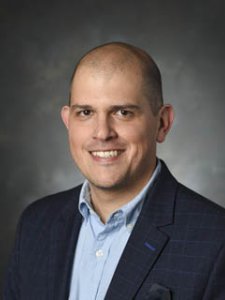
Roberto Fernández, assistant professor of civil and environmental engineering at Penn State, will give the talk “Living with Water” on Sept. 25 in the Earth and Engineering Sciences Building at University Park. The talk will also be available via Zoom.
Mentions

Flight of imagination
| pennstatermag.com
An array of Penn State alumni, faculty, and students have played an essential role in NASA’s upcoming Dragonfly mission, a groundbreaking exploration of Saturn’s largest moon in search of a new understanding of the origins of life on Earth.
Mentions




College of Agricultural Sciences hosts Ukrainian scholars
| psu.edu
Managed by Ag Sciences Global in the college, the Woskob International Research in Agriculture Scholar Program is the Woskob New Century Fund’s flagship educational exchange program. It covers visiting scholars’ travel and living expenses. The program gives Ukrainian instructors a semester-long opportunity to expand their knowledge and expertise by attending classes and working with the college’s faculty.
Mentions








Oct. 15 symposium to explore AI's role in life sciences research
| psu.edu
The ICDS/Huck AI Symposium, hosted by the Huck Institutes of the Life Sciences and the Institute for Computational and Data Sciences on Oct. 15, will bring together researchers from across Penn State and beyond to explore how artificial intelligence is transforming the life sciences.
Mentions
-
Christina Grozinger
 Distinguished Professor and Publius Vergilius Maro Professor of Entomology, Entomology
 -
Andrew Read
-
Wenrui Hao
 Wenrui Hao
 -
Sarah Ivory



Recycled concrete aggregate may help treat acid mine drainage
A study led by Penn State researchers suggests that recycled concrete aggregate and an iron-rich byproduct of steel production could help treat acid mine drainage, the toxic runoff that pollutes thousands of miles of streams in Pennsylvania and other coal-mining regions.
Mentions


Double dip: Sampling contaminants of emerging concern two ways improves accuracy
Two are better than one when it comes to sampling methods for tracking the location and timing of toxic chemical contamination in waterways, according to researchers at Penn State. The team tested two typical sampling approaches and found that both are needed to accurately assess both the variety and concentration of contaminants of emerging concern — pharmaceuticals, personal care products, livestock manure-borne hormones, veterinary antibiotics and pesticides — in a watershed.
Mentions
-
Heather Preisendanz
-
Henry Kibuye
-
Tyler Groh
-
Tamie L. Veith
 Agricultural Engineer, USDA-ARS-Pasture Systems and Watershed Management Research Unit



Improved thin film harnesses indoor light to power devices
Remember the solar calculator from middle school math class that had a small solar cell at the top? The idea behind that technology is not a relic of the past, but the subject of continuous innovation. Today’s indoor solar cells, known as photovoltaics, use new semiconductor materials, such as metal halide perovskite, to convert ambient light into electricity to power small electronic devices without needing batteries or a power outlet.
Mentions
-
Ivy Mawusi Asuo
-
Nutifafa Yao Doumon
 Assistant Professor and Virginia S. & Philip L. Walker Jr. Faculty Fellow, Materials Science and Engineering


Pennsylvania’s aging levees are under pressure from scarce funding and severe weather
Pennsylvania has over 180 levees that span approximately 155 miles (255 kilometers) and keep its rivers from flooding. They protect about 158,000 people and US$26.2 billion in property across the state, according to the U.S. Army Corps of Engineers.However, those levees are aging, and funding to maintain and improve them is becoming scarcer.
Authors

Seed Grant Projects


$1.5M NSF grant to support K-12 learning with real-world educational dataset
| psu.edu
The U.S. National Science Foundation has awarded a research team at Penn State $1.5 million over three years to develop an educational dataset containing real industrial data. The team aims to bring their dataset to math classrooms in Pennsylvania school districts and identify ways to foster productive learning while addressing unproductive confusion.
Mentions




Could plant scientists breed heavy metal contamination out of cacao?
| psu.edu
Varieties of cacao plants — which give rise to chocolate — differently mitigate and manage a toxic heavy metal that occurs naturally in the plants' soil. Researchers have now identified genetic differences in how two varieties manage metal uptake and facilitate the metal’s movement throughout the plant, which could help inform breeding practices.
Mentions


Ask an Expert: How could data centers impact public lands?
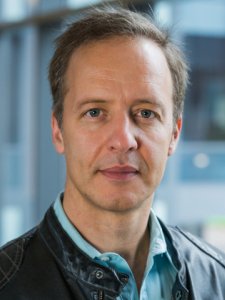
The construction of new data centers is shaping up to be a defining issue in the 2026 midterm elections. Politicians in both parties have been distancing themselves from data centers in the face of public discontent around the issue, with public backlash leading to the freezing of dozens of data center projects nationwide this year.
Mentions



Stuckeman School to showcase innovations in design research at Open House
| psu.edu
The Stuckeman School in the Penn State College of Arts and Architecture is hosting its annual Research Open House from noon to 1:30 p.m. on Oct. 1 in the Jury Space of the Stuckeman Family Building to highlight the diverse research that is ongoing by faculty and students within the school.
Mentions