
The Center for Quantitative Imaging (CQI) provides high-resolution X-ray computed tomography (CT) and advanced non-destructive testing to help industry partners visualize internal structures, quantify material properties, and solve complex quality and performance challenges.
The technology of microCT scanning creates high-resolution three-dimensional 3D images by using x-rays. To do this, the microCT scanner collects two-dimensional (2D) trans-axial projections (or slices) of the scanned material/specimen. Once collected, the slices are then reconstructed into a full 3D model.
Lab technicians work closely with clients to understand the objectives and offer the best possible solutions, collaborate on the process, and deliver the finest images.
Computed Tomography Users Group
Join the Penn State Computed Tomography (CT) Users Group, hosted by the Center for Quantitative Imaging (CQI). CT is a powerful imaging technique that creates high-resolution 3D images of anything from delicate fish specimens to complex electronics. This allows for a non-destructive examination of internal structures, providing valuable insights into their composition and function.

Work with Us
The Center for Quantitative Imaging is available to assist both Penn State researchers and external clients from industry, government, and other universities. Get started:
Penn State's Center for Quantitative Imaging met our needs wonderfully despite the intricacies of federal contracting. I was very happy with their responsiveness, willingness to work to find a solution, and flexibility. The quality of service was absolutely top notch, the staff were both knowledgeable and accessible, and the final product exceeded my expectations.

Research Zoologist, Smithsonian Institution
The flexibility of engagement is exceptional—whether dropping off a sample for scanning or working closely with expert staff to tailor data acquisition to a research question. Their expertise, willingness to assist, and excellent training in instrument use and image processing make it possible to run complex, multi-day experiments that simply couldn’t happen without their support.

Professor, John and Willie Leone Department of Energy & Mineral Engineering (EME)
The team at CQI worked with us to use microCT to visualize the vasculature in the mouse spine. Their expertise helped us generate beautiful and detailed anatomical images that were key for our project’s success.

Professor, Department of Neurosurgery
Interim Director, Huck Institutes of the Life Sciences
The Center for Quantitative Imaging provides exceptional service, combining outstanding image quality and with dependable scheduling. Their professionalism, efficiency, and commitment to excellence make them an invaluable partner in research, ensuring our projects are completed smoothly, on time, and to the highest scientific standards.

Research Assistant, Anthropology
The Center for Quantitative Imaging combines advanced CT imaging with outstanding service. Their outstanding team consistently delivers high-quality data quickly and has often accommodated urgent project deadlines, making them an invaluable partner for industry-sponsored projects.

Associate Professor, Mechanical Engineering
Penn State’s Center for Quantitative Imaging was pivotal to our corrosion studies on power-plant metal. Their state-of-the-art equipment, clear data analysis, and professional, timely, and knowledgeable staff enabled us to generate high-quality results efficiently.

Assistant Professor, John and Willie Leone Department of Energy & Mineral Engineering (EME)
Core Capabilities
Techniques
- High-resolution microCT
- Industrial CT scanning
- 3D volume reconstruction
- Digital segmentation and visualization
- Quantitative image analysis and measurement
What We Measure
- Internal defects, porosity, inclusions, and cracks
- Dimensional accuracy and geometric deviations
- Material distribution, density, and structural uniformity
- Failure modes and degradation pathways
What You Gain
- Accurate, non-destructive insight into internal structures
- Faster troubleshooting of product issues
- Higher confidence in material and component performance
- Data to support R&D, quality control, and regulatory needs
Industries We Serve

Food & Packaging
CQI helps companies evaluate product integrity and optimize packaging performance without compromising samples.
Typical applications:
- Detecting internal packaging defects
- Evaluating food structure for quality and safety
- Confirming barrier integrity and seal performance
- Quantifying stress points and deformation

Materials & Engineered Products
We support R&D and quality assurance for advanced materials where internal structure determines performance.
Typical applications:
- Characterizing porosity and internal flaws in composites
- Validating additive manufacturing and 3D-printed parts
- Assessing structural integrity and failure mechanisms
- Comparing material behavior under different conditions

Coatings, Paints & Chemical Products
Non-destructive imaging reveals how coatings and chemical products interact with substrates—something conventional methods can’t see.
Typical applications:
- Measuring coating thickness and uniformity
- Detecting subsurface defects or delamination
- Analyzing chemical or material distribution
- Supporting formulation and performance testing

Electronics & Consumer Goods
Our imaging systems reveal complex internal assemblies with micron-level clarity to help ensure reliability and safety.
Typical applications:
- Inspecting circuitry, solder joints, and connectors
- Identifying internal manufacturing defects
- Evaluating wear, fatigue, or failure points
- Supporting quality control for complex devices

Construction & Building Materials
3D imaging helps companies understand durability, structural performance, and long-term material behavior.
Typical applications:
- Evaluating concrete porosity and aggregate distribution
- Detecting cracks, voids, and hidden failures
- Measuring reinforcement placement
- Supporting durability and performance studies

Healthcare
CQI supports healthcare, biomedical, and life science partners by providing non-destructive, high‑resolution imaging and quantitative analysis of medical devices, biological materials, and healthcare-related products. Our imaging capabilities enable detailed internal visualization and measurement without altering or destroying sensitive samples, supporting innovation, safety, and regulatory confidence.
Typical applications:
- Evaluating internal structures of medical devices, implants, and components
- Assessing manufacturing quality, dimensional accuracy, and material uniformity
- Detecting internal defects, voids, or misalignments in device assemblies
- Quantifying porosity and structural integrity of biomaterials and scaffolds
- Supporting pre‑clinical research, product development, and failure analysis
Capabilities
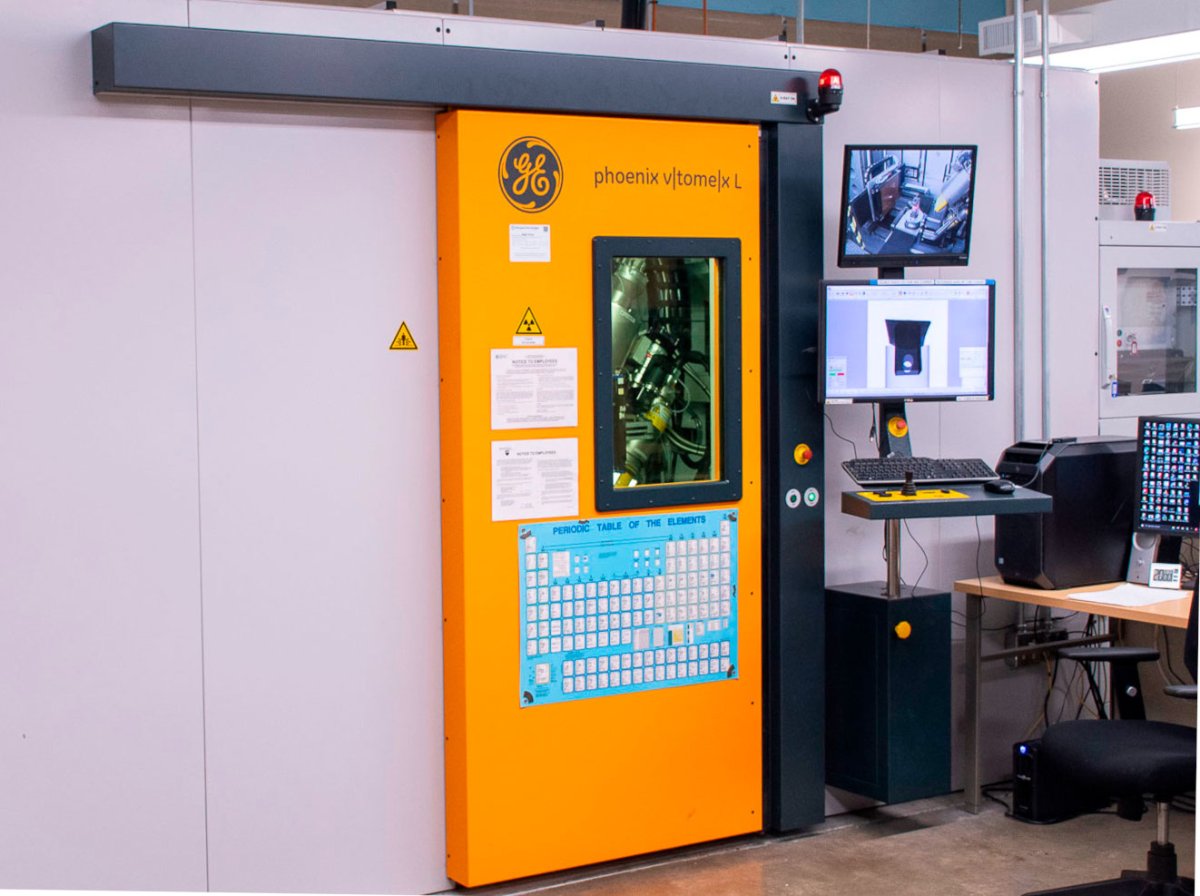
GE v|tome|x L Micro-Nano CT
High-resolution, 3D-computed tomography
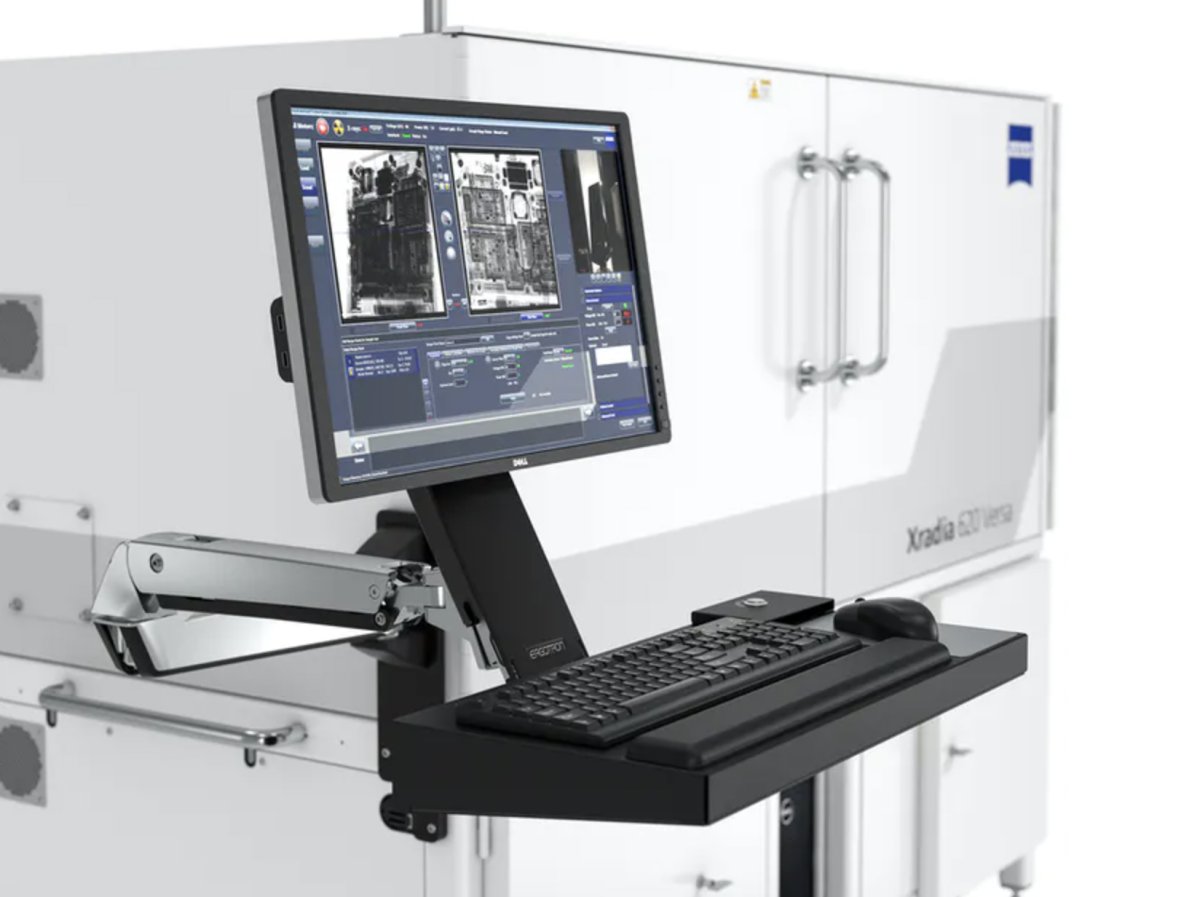
Zeiss Versa 620
Non-destructive sub-micron scale imaging
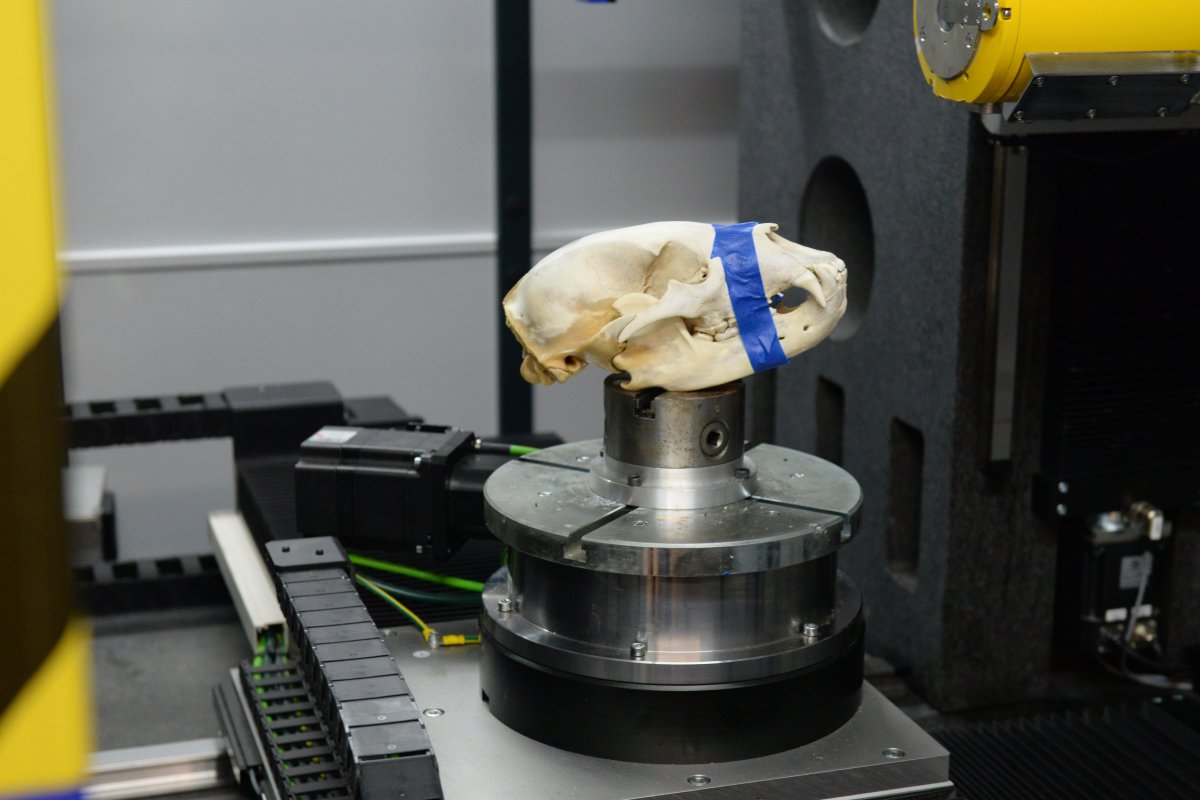
3D Visualization and Analysis
In the News


Center for Quantitative Imaging Staff



Address
Center for Quantitative Imaging
416 Academic Activities Building
University Park, PA 16802

About the Center for Quantitative Imaging
The Center for Quantitative Imaging provides advanced X-ray computed tomography and image analysis services to support research across engineering, agriculture, energy, environmental science, medicine and industry.
Researchers work with the center to visualize internal structures, quantify material properties and solve complex imaging challenges without destroying the sample.
Core Capabilities

X-ray computed tomography
High-resolution, non-destructive imaging that reveals internal structures without sectioning or destroying samples.
- Internal structure visualization
- 2D and 3D imaging
- Non-destructive evaluation

Quantitative image analysis
Image-based measurements and visualizations that help researchers quantify structure, defects and material properties.
- Segmentation and measurement
- Porosity and defect analysis
- Volume and dimensional data

Research collaboration
Staff expertise that helps connect research questions to the right imaging approach, workflow and deliverables.
- Project planning
- Method development
- Data interpretation support
Applications
The center supports research and partner needs where internal structure, material properties, defects or 3D visualization matter.
Materials and manufacturing
Imaging support for components, composites, assemblies, polymers and engineered materials.
Food & Packaging
CQI helps companies evaluate product integrity and optimize packaging performance without compromising samples.
Coatings, Paints & Chemical Products
Non-destructive imaging reveals how coatings and chemical products interact with substrates—something conventional methods can’t see.
Electronics & Consumer Goods
Our imaging systems reveal complex internal assemblies with micron-level clarity to help ensure reliability and safety.
Construction & Building Materials
3D imaging helps companies understand durability, structural performance, and long-term material behavior.
Healthcare
CQI supports healthcare, biomedical, and life science partners by providing non-destructive, high‑resolution imaging and quantitative analysis of medical devices, biological materials, and healthcare-related products.
Work with the laboratory
Early conversations help determine the appropriate imaging approach, sample preparation requirements and project scope.
Discuss your project
Connect with staff to review project goals, sample details and imaging needs.
Plan the imaging approach
Review sample size, resolution needs, scan strategy, reconstruction and analysis expectations.
Receive imaging data
Coordinate scanning, reconstructed datasets, visualizations and quantitative measurements.
