
Pennsylvania releases new mapping tool to show flood risk
| fema.gov
The Commonwealth of Pennsylvania released a new mobile tool, https://pafloodrisk.psu.edu/home/index.html, that provides the latest flood mapping information. The new mapping tool, which can be used from a desktop computer, cell phone, or other mobile device, brings together data from FEMA and across the Commonwealth into one consolidated application.
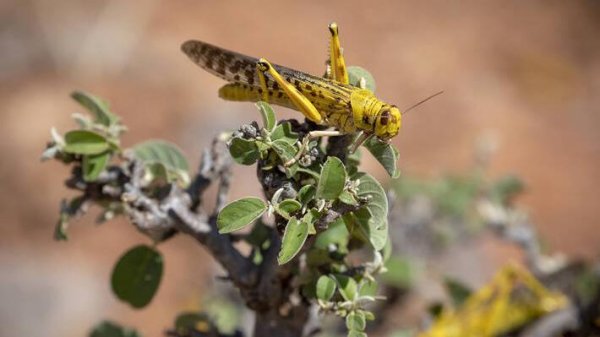
PlantVillage team lauded for projects to protect food supply amid COVID, locusts
| psu.edu
Penn State researchers responsible for PlantVillage, a mobile app that helps farmers diagnose crop diseases and monitor pests, have been lauded for their work to help African farmers overcome challenges related to desert locusts and COVID-19.
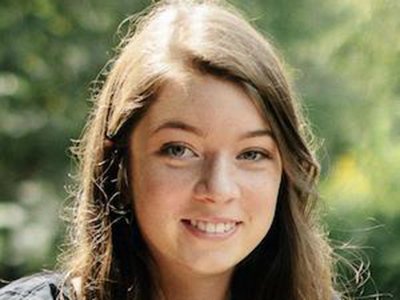
Biological engineering student selected for Cargill Global Scholars Program
| psu.edu
Rising second-year biological engineering major Vancie Peacock was selected to be part of the Cargill Global Scholars Program, an international leadership program sponsored by global food corporation Cargill.
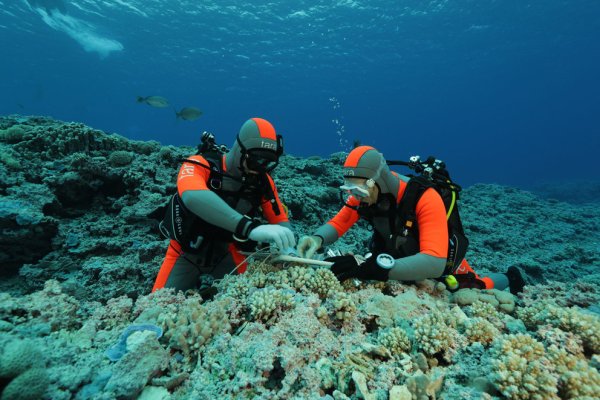
Penn State biologist and colleagues receive $4M to identify heat-tolerant corals
| news.psu.edu
An international team that includes Penn State biologist Iliana Baums has been awarded a $4 million grant from the Paul G. Allen Family Foundation to identify corals that are naturally resilient to climate change. This is one of four newly funded projects supported by the foundation that are focused on the conservation and restoration of coral reefs in the context of the climate crisis.
Penn State, University of Freiburg announce joint seed-grant recipients
| psu.edu
The Convergence Center for Living Multifunctional Material Systems, in partnership with the University of Freiburg’s Cluster of Excellence for Living, Adaptive and Energy-autonomous Materials Systems, has announced the recipients of the inaugural Living Multifunctional Materials Collaborative Research Seed Grant Program. Three joint faculty teams from Penn State University and University of Freiburg were selected for the program.
Sick of dangerous city traffic? Remove left turns
| theconversation.com
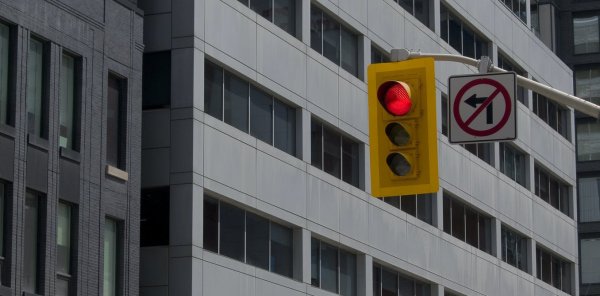
Left turns are dangerous and slow down traffic. One solution? Get rid of them. New research shows that limiting left turns at busy intersections would improve safety and reduce frustrating backups.

Researchers awarded grant to advance geothermal energy science
| news.psu.edu
Using the heat from the Earth’s crust, geothermal power plants harvest and store energy in massive underground reservoirs carved out of stone. Once built, the reservoirs are inaccessible and monitored remotely — but not infallible.

Growing Impact: Unlocking a world of energy
| Featuring Mohamed Badissy
Some countries in Africa and Asia have been locked into contracts that prevent improvements to existing electricity systems. Mohamed Badissy and his team are examining these contracts to find ways that could make these systems more efficient, sustainable, and cleaner. Transcript INTRO: It doesn't matter how normal electricity becomes a part of our daily lives, it's still a surprisingly complex marketplace.
Institute awards 14 computational and data sciences seed grants
| psu.edu
From safe road to exoplanet discovery, Institute for Computational and Data Sciences seed grants are designed to help scientists use the latest computational technology and cutting-edge data science techniques to deepen understanding and develop innovation across fields and disciplines.

Scientists develop transparent electrode that boosts solar cell efficiency
| news.psu.edu
Developing new ultrathin metal electrodes has allowed researchers to create semitransparent perovskite solar cells that are highly efficient and can be coupled with traditional silicon cells to greatly boost the performance of both devices.

Reef-building corals and microscopic algae within their cells evolve together
| news.psu.edu
The microscopic algae that live inside and provide nutrients to their reef-building coral hosts may be evolving in tandem with the corals they inhabit, so each partner is fine-tuned to meet one another’s needs. A new study by Penn State biologists reveals that genetic differences within a species of these microalgal symbionts correspond to the coral species they inhabit, a discovery that could have implications for the conservation of these endangered corals.
University partners with students to further educate community on sustainability
| news.psu.edu
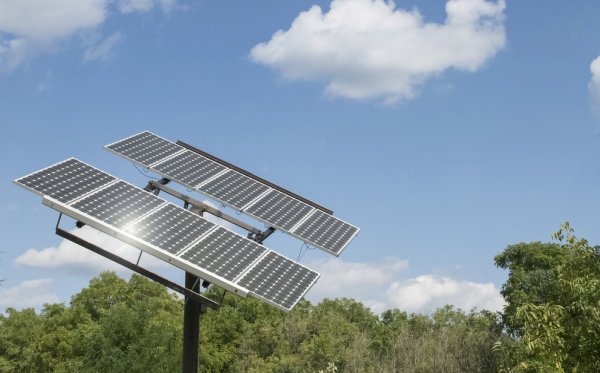
To continue Penn State’s commitment toward a sustainable future, University leaders are working with the University Park Undergraduate Association (UPUA) and various student organizations to educate the Penn State community and update student leaders on the University’s overarching actions toward sustainability and its energy-related investment strategies.