
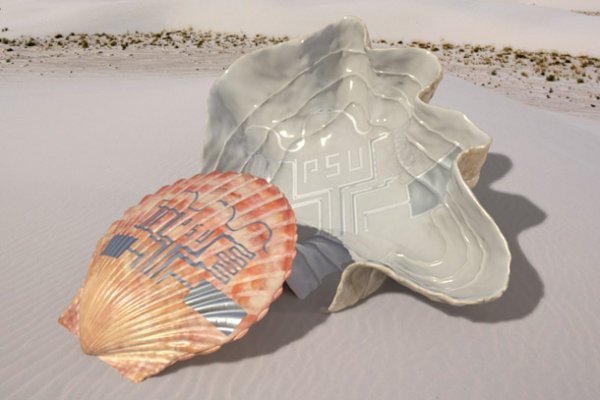
Printing circuits on irregular surfaces with pulses of light
| news.psu.edu
Printable electronics could cause a proliferation of smart, connected devices, from household appliances that can communicate with each other to medical diagnostic sensors that can be placed on the body to forgo invasive procedures. Led by Penn State, an international team of researchers developed a low-cost, low-heat transfer technique that can print biodegradable electronics on a variety of complex geometries and, potentially, human skin.

World-renowned data science experts to discuss the future of digital fairness
| news.psu.edu
The two-day ICDS Fall Symposium will be held Oct. 6 and 7 to bring together researchers from around the U.S. to discuss data, equity, reproducibility and other topics related to fairness in data science. The speakers and panelists will lead discussions on the ownership of artificial intelligence models and data, unintentional bias, data manipulation transparency, reproducibility and more.
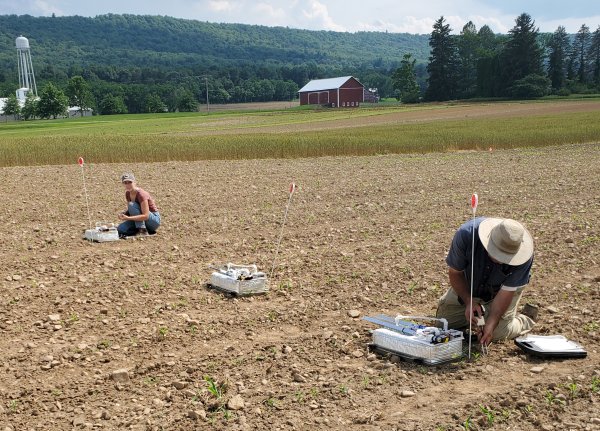
Nitrous oxide emissions, coming from legume cover crops, manure, can be reduced
| psu.edu
The application of manure after the growth and demise of legume cover crops in rotations is a recipe to increase nitrous oxide releases during ensuing corn growth, according to a team of researchers who suggest innovative management strategies are needed to reduce these emissions.

Hypersonic, autonomous flight research bolstered by $1.5 million grant
| psu.edu
Puneet Singla, professor of aerospace engineering, is principal investigator on a recently awarded $1.5 million, three-year grant from the United States Department of Defense to study autonomous flight in hypersonic vehicles.

Historic fire regimes lay groundwork for future forest management in western US
| news.psu.edu
Researchers say understanding the benefits of the periodic, low-severity fires that used to burn in semi-arid forests in the western United States and the forest structure that they maintained may help land managers and communities avert megafires in the future.
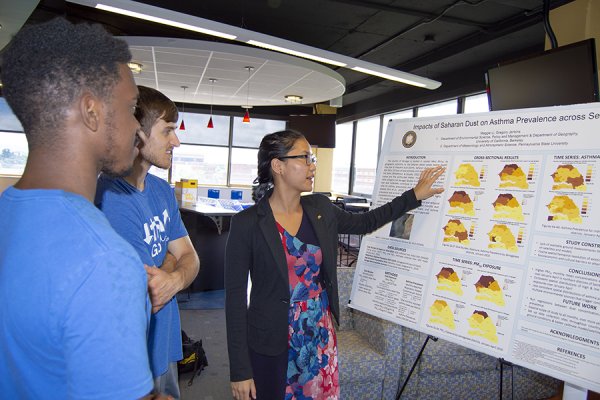
Climate science experiences to wrap up with poster presentations on Aug. 5
| news.psu.edu
Penn State's Climate Science Research Experiences for Undergraduates program is hosting their final symposium from 11 a.m. to 1:30 p.m. Thursday, Aug. 5, in the Steidle Building Atrium on the University Park campus. The symposium is free and open to the public.

Algorithm helps probe connections between stream chemistry and environment
| news.psu.edu
Researchers say their novel application of a machine learning algorithm can analyze how the chemical makeup of a stream changes over time, which could help with environmental modeling and understanding.
Podcast discusses creating inexpensive catalysts for renewable energy
| news.psu.edu
The latest episode of the Growing Impact podcast discusses a seed grant project that is exploring the development of new catalysts used in the process of splitting water into hydrogen and oxygen for use as renewable energy.

Growing Impact: Accelerating renewable energy
| Featuring Mauricio Terrones, Lauren Zarzar
Splitting water into hydrogen and oxygen requires a lot of energy. By introducing catalysts into the process, these renewable energy sources can be created more efficiently. The challenge is that these catalysts use precious metals and are expensive. Mauricio Terrones and Lauren Zarzar are working on a novel method to develop inexpensive and efficient catalysts to split water.

Faculty Friday: Kristina Douglass
Meet Kristina Douglass, an IEE co-fund and College of Liberal Arts faculty member. One thing she wants you to know about her research is that there are lessons we can learn from the past about coping with climate change.

Stuckeman School professor recognized for sustainability efforts
| psu.edu
Mihyun Kang, director for sustainability in the College of Arts and Architecture and research professor in the Stuckeman School, has been named a 2021 Campus Sustainability Champion by the Pennsylvania Environmental Resource Consortium in recognition of her work to advance sustainability at Penn State.
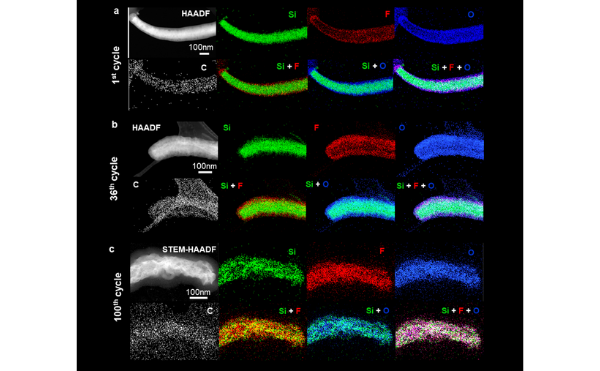
Novel method of imaging silicon anode degradation may lead to better batteries
| news.psu.edu
A novel method of characterizing the structural and chemical evolution of silicon and a thin layer that governs battery stability may enable better lithium batteries.