
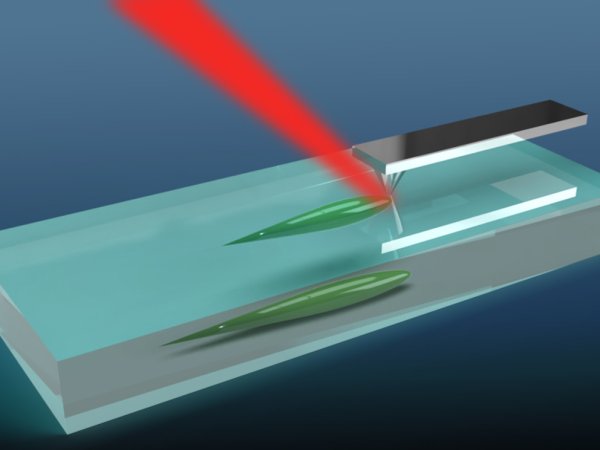
'Seeing' previously unseen nano-level glass damage
| news.psu.edu
An advanced form of spectroscopy has enabled a team of researchers to "see" nano-level imperfections in glass, a finding that could potentially lead to more durable, stronger glass.
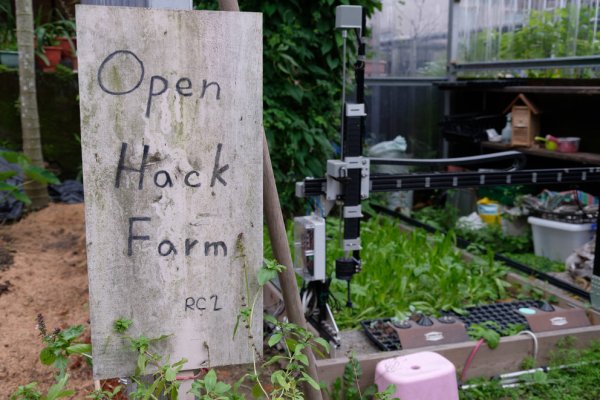
Observing eco farmers could guide sustainable information technology innovation
| news.psu.edu
Cutting-edge agricultural technology has advanced in recent years, introducing innovations from self-driving tractors and laser scarecrows to robotic bees that aid in pollination. Does their impact on the global climate make communities and the world a better place?

'Getting to Negative: Strategies, Ethics and Co-benefits' webinar on May 19
| news.psu.edu
Increasingly aggressive strategies are needed to reduce current and future carbon emissions and proactively remove carbon-based heat-trapping gasses that have been emitted to date. A panel of experts will discuss this topic during the webinar “Getting to negative: strategies, ethics and co-benefits.” The virtual webinar will be held from 11:30 a.m. to 12:30 p.m. on May 19 and is free and open to the public.
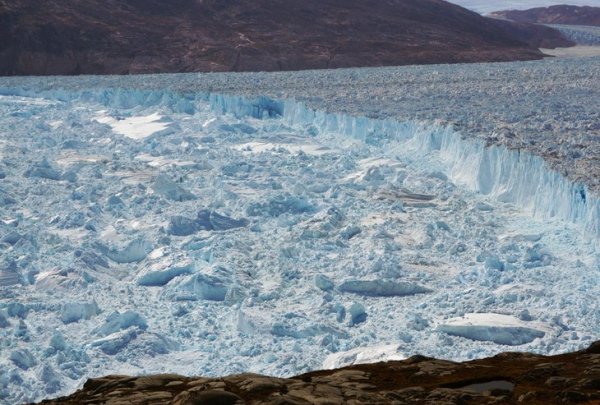
Antarctic ice model shows unstoppable sea level rise if Paris target is not met
| news.psu.edu
The world is currently on track to exceed 3 degrees Celsius (5.4 degrees Fahrenheit) of global warming by the year 2100, and new research shows that such a scenario would drastically accelerate the pace of sea-level rise.

Three selected as Administrative Fellows for 2021-22
| news.psu.edu
The Administrative Fellows Program offers Penn State faculty and staff the opportunity to work with senior University officers to gain knowledge and experiences pertaining to the challenges of leadership in the academic community. The Administrative Fellows for 2021-22 are Carrie Jackson, Erica Smithwick and Kristin Sykes.
Penn State to lead critical minerals consortium powered by $1.2 million from DOE
| news.psu.edu
A region famous for the coal that once fueled a growing nation is now the focus of a $1.2 million project, led by Penn State researchers, aimed at establishing domestic supplies of critical minerals needed to produce modern technology from cell phones to fighter jets.
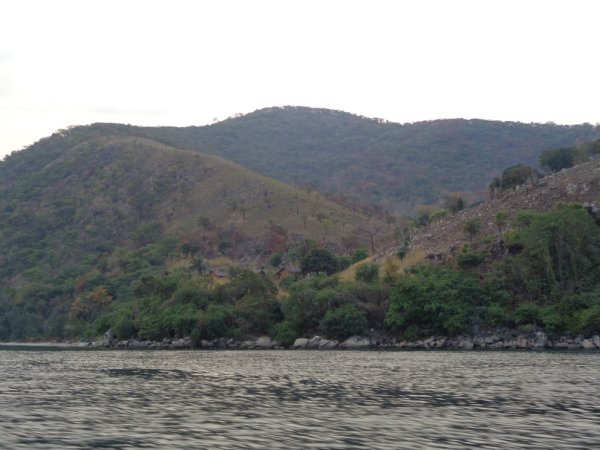
Landscape shows earliest effects of modern humans using fire to shape ecosystem
| news.psu.edu
New archaeological and paleoenvironmental evidence from Lake Malawi, Africa, shows that early modern humans used fire in a way that prevented regrowth of the region’s forests and created the sprawling bushland that exists today, according to researchers.

Early humans used fire to permanently change the landscape tens of thousands of years ago in Stone Age Africa
| theconversation.com
Combining evidence from archaeology, geochronology and paleoenvironmental science, researchers identified how ancient humans by Lake Malawi were the first to substantially modify their environment.

June 9 webinar to focus on adaptive architecture research, collaboration
| psu.edu
A June 9 interactive webinar will focus on adaptive architecture research, a critical component in the pursuit of the sustainable, equitable and resource-efficient future of the built environment. Attendees can share, collaborate and ideate new research ventures in preparation of the next Living Multifunctional Materials Collaborative Research Seed Grant Program.
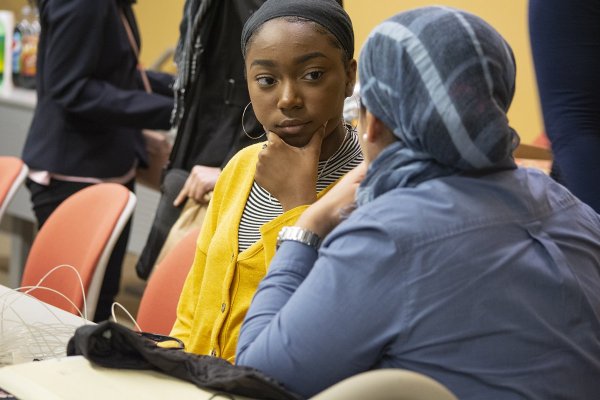
Penn State EnvironMentors, Changing the STEM narrative
| by Lorraine Jones
First-generation, racially marginalized groups and women both remain underrepresented in science, technology, engineering, and math (STEM) education and careers. White women make up 18% of the STEM workforce compared to 49% of their white male counterparts. Racially marginalized groups continue to be in the single digits within the STEM workforce.

June 9 webinar to focus on adaptive architecture research, collaboration
| news.psu.edu
A June 9 interactive webinar will focus on adaptive architecture research, a critical component in the pursuit of the sustainable, equitable and resource-efficient future of the built environment. Attendees can share, collaborate and ideate new research ventures in preparation of the next Living Multifunctional Materials Collaborative Research Seed Grant Program.

Growing Impact: Wind energy's dirty secret
| Featuring Stephen Chmely, Christine Costello
Stephen Chmely and Chris Costello discuss how wind energy has a dirty secret surrounding the wind turbine blades and their disposal. The research team is exploring materials to reduce the waste associated with the blades.