

Discover 'The Lost Bird Project,' learn conservation efforts in Centre Region
| psu.edu
"The Lost Bird Project," which memorializes five extinct North American species, is an opportunity for Centre Region residents to learn about conservation efforts now and in the future with a series of public programs slated to take place throughout the spring.
Libraries, ICDS host February workshops on lab computing skills for researchers
| psu.edu
This month, Penn State University Libraries and the Institute for Computational and Data Sciences will co-host two online workshops based on the training offered by The Carpentries, a global community that provides instruction and instructional resources on topics related to computational research.
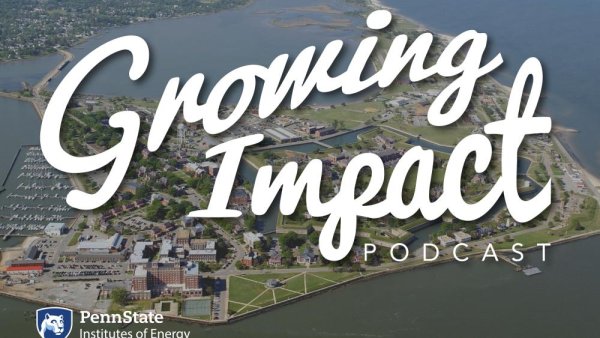
Podcast looks at sea-level rise, its impact on culturally significant sites
| psu.edu
The latest episode of the Growing Impact podcast features a seed-grant project that aims to provide information to decision makers who oversee culturally significant, historic landmarks and sites where sea-level rise is likely to occur.
Dope Labs podcast creators to host science communication workshops at Penn State
| psu.edu
Dope Labs podcast creators and hosts Titi Shodiya and Zakiya Whatley will present Dope Labs Science Communication Week at Penn State, a four-day remote event that will introduce researchers to the broader science communication community and teach them to use social media, storytelling and a web presence to network with other scientists and engage with broad audiences. The event takes place Feb. 7-10.
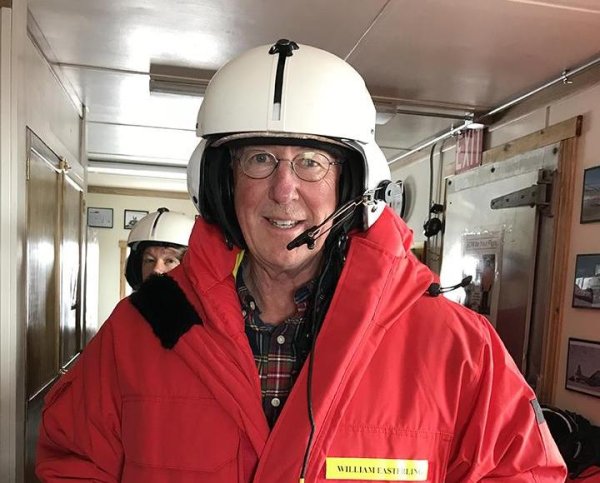
Easterling brought holistic approach to pressing science problems at NSF
| psu.edu
Geographer and climate scientist William Easterling recently returned from a four-year position with the National Science Foundation (NSF), where he saw from a different perspective the complex and intertwining issues that have encompassed his decades-long career.

Microwave data assimilation improves forecasts of hurricane intensity, rainfall
| psu.edu
Adding microwave data to existing computer weather forecast models showed improvements in forecasting storm track, intensity and rainfall when using Hurricane Harvey as a case-study. Adding the readily available data to models could produce more accurate forecasts for future storms, Penn State scientists said.

Growing Impact: Visualizing history's future
| Featuring Peter Stempel
As sea-levels rise due to climate change, historical monuments and landscapes near bodies of water are at risk. A new research project will provide decision makers with information on what that could look like for their site. Specifically, the project is focused monuments and landscapes that are significant to African American, Indigenous, and other minority communities.

Food and fuel required to meet global challenges, say ag leaders
| cals.iastate.edu
Food and fuel—not food versus fuel—is the focus of a hopeful new commentary in the peer-reviewed scientific journal “Nature Sustainability.”

Increased storminess may give rise to North Atlantic’s ‘cold blob’
| psu.edu
While climate change is making much of the world warmer, temperatures in a subpolar region of the North Atlantic are getting cooler. A team of researchers report that changes in the wind pattern, among other factors, may be contributing to this “cold blob.”
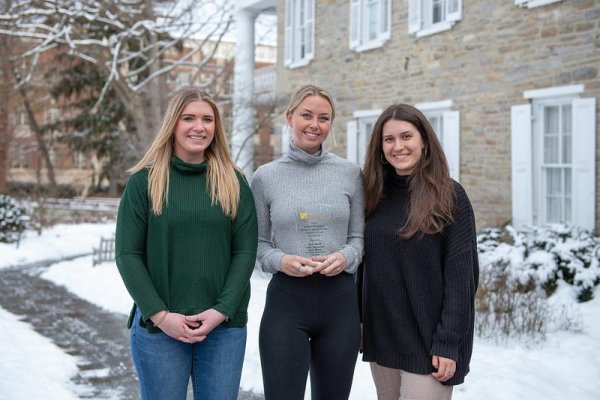
Architectural engineering graduate student team recognized in lighting design contest
| news.engr.psu.edu
Architectural engineering graduate student team recognized in lighting design contest.
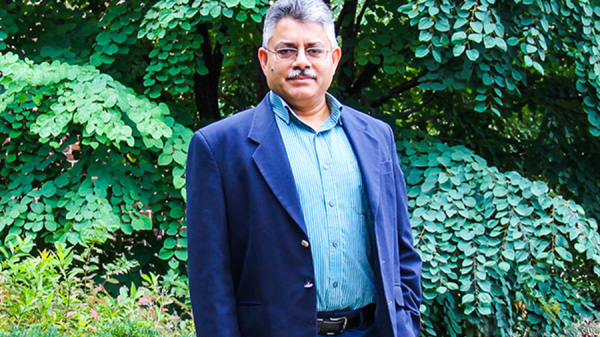
Sanjay Srinivasan named distinguished member by Society of Petroleum Engineers
| psu.edu
Sanjay Srinivasan, department head of the John and Willie Leone Family Department of Energy and Mineral Engineering, has been honored as a distinguished member by the Society of Petroleum Engineers. One of 22 recipients selected for 2021, he joins only 696 other members honored since the establishment of the award in 1983.

US pushes for better tap water but must win over wary public
| abcnews.go.com
Since the lead water crisis in Flint, Michigan, fewer Americans trust the water coming out of their taps