

Faculty team awarded $2.85 million NSF grant for K-12 education
| psu.edu
The National Science Foundation has awarded a $2.85 million grant to a team of Penn State faculty for a carbon research/science education collaboration with two Pennsylvania school districts. The five-year Carbon Educators and Researchers Together for Humanity (CarbonEARTH) project teams Penn State Science, Technology, Engineering, and Mathematics (STEM) graduate students with elementary and middle school science teachers from the rural Phillipsburg and the urban Harrisburg school districts.
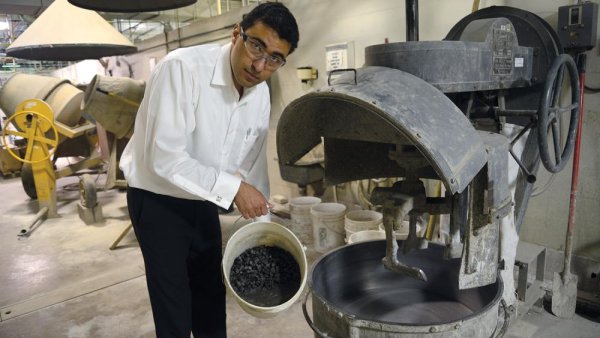
Concrete solutions to aging bridges
| psu.edu
New recipes for concrete -- and new ways to monitor old concrete -- aim for safer, longer-lasting bridges. Penn State civil engineering faculty are researching methods for enhancing the maintenance and durability of civil infrastructure, including anything made of concrete, from bridges to roads to buildings.
NSF award supports Warn's research on building design
| psu.edu
Gordon Warn, associate professor of civil engineering, along with two other Penn State faculty members, recently received a National Science Foundation award to fund their research on resilient and sustainable building design.
O’Connor receives Air Force Young Investigator grant
| psu.edu
Jacqueline O’Connor, assistant professor, mechanical engineering, was awarded a three-year grant through the Air Force Office of Scientific Research Young Investigator Research Program.
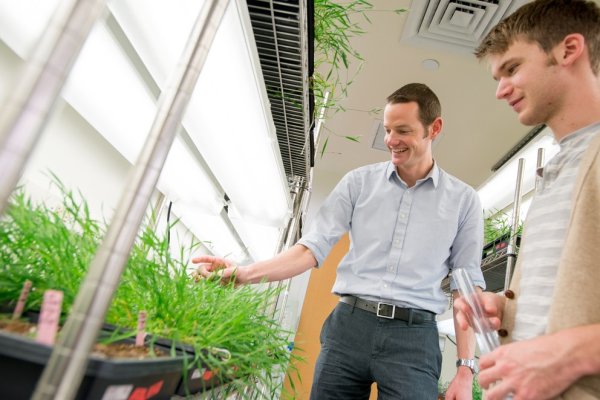

NASA awards $30M grant to Penn State to help answer climate questions
| psu.edu
Penn State will lead a five-year, $30 million mission to improve quantification of present-day carbon-related greenhouse gas sources and sinks. An improved understanding of these gases will advance our ability to predict and manage future climate change.
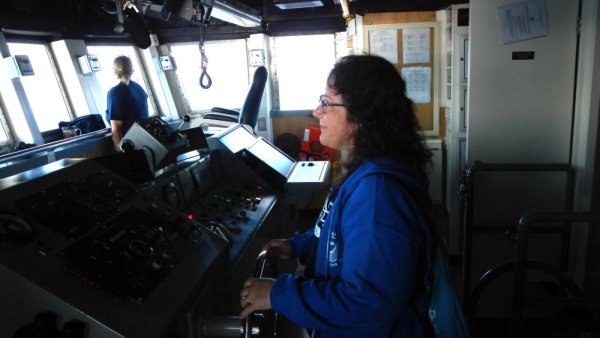
Talk to explore surveying the seafloor Jan. 15
| psu.edu
Rita Bowker, hydrographic survey technician on the National Oceanic and Atmospheric (NOAA) ship Thomas Jefferson, and Laura Guertin, associate professor of earth science at Penn State Brandywine and participant in the NOAA Teacher at Sea Program, will present at 11:30 a.m. Jan. 15 in Tomezsko 103 about hydrographic surveying.

The future looks bleak for bones
| theatlantic.com
How the advent of agriculture and online food ordering changed the human skeleton for the worse.

Fragile bones of modern humans result from reduced physical activity
| psu.edu
The comparatively light bone structure of modern humans compared to early human species and other modern primates may be due to the modern abandonment of the constant physical activity that was inherent in the life of early hunter gathers, according to an international team of researchers. This knowledge may aid in prevention of osteoporosis and hip fracture in the elderly.

Marcellus drilling boom may have led to too many hotel rooms
| psu.edu
Drilling in Pennsylvania's Marcellus Shale region led to a rapid increase in both the number of hotels and hotel industry jobs, but Penn State researchers report that the faltering occupancy rate may signal that there are now too many hotel rooms.
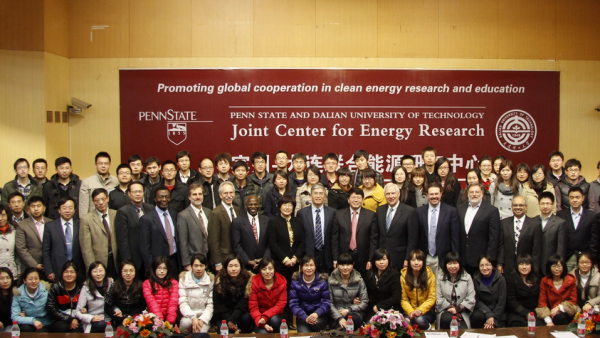
Joint Center for Energy Research promotes U.S.-China collaboration
| psu.edu
With the goal of promoting global cooperation in clean energy research and education, Penn State and Dalian University of Technology (DUT) in China established an international Joint Center for Energy Research (JCER) in 2011 as a part of global engagement efforts at both universities.

Penn State Brandywine professor joins NOAA crew for research mission at sea
| psu.edu
Since joining Penn State Brandywine’s faculty in 2001, Associate Professor of Earth Science Laura Guertin has focused on bringing real-world perspective into the classroom. The geologist recently voyaged to sections of the Atlantic Ocean to conduct a research mission with the National Oceanic and Atmospheric Administration (NOAA) as part of its Teacher at Sea Program.