
Technical support for chemical analysis and contaminant screening
The Environmental Contaminants Analytical Laboratory (ECAL) helps researchers and partners answer questions about chemical characterization and quantification in a wide range of environmental, biologic and synthetic matrices.
This page highlights the laboratory’s analytical expertise, instrumentation, and supported sample types.

Analytical capabilities
Contaminants, materials, and chemical profiles
Methods & techniques
How questions connect to analytical workflows
Analytical equipment
Instrumentation used to support testing
Sample types
Environmental, biological, and material samples
Deliverables
Data, QA/QC, and reporting support
Analytical Capabilities

Materials characterization
Chemical profiling to understand composition, degradation, and material performance in products and engineered systems
- Packaging and food-contact materials
- Coatings, paints, adhesives and sealants
- Textiles and performance materials
- Polymer components and consumer products

Exposure and environmental screening
Analysis that supports environmental monitoring, exposure assessment, and research into contaminant fate and transport
- Water, sediment, soil and biosolids
- Particle-bound chemicals
- Plant and aquatic biological samples
- Screening for trace contaminants and impurities
Research, analytical methods1 and expertise
- PFAS suspect screening - EPA 1621; targeted analysis - EPA 537.1, EPA 1633, OTM-45; non-targeted analysis using high-resolution mass spectrometry workflows for PFAS discovery and characterization
- Pharmaceuticals and personal care products - EPA 1694
- Volatile organic compounds (VOCs) - EPA SW-846 Method 8260D
- Semivolatile organic compounds (SVOCs) – EPA SW-846 Method 8270E
- Total petroleum hydrocarbons (TPH) – EPA SW-846 Method 8015D
- Dioxins and furans – EPA SW-846 Method 1613B and EPA Method 8290A
- Agricultural chemicals and transformation products using GC-MS/MS, LC-MS/MS, and suspect screening workflows
- Microplastics and nanoplastics2 – ASTM D8333, NOAA Laboratory Methods for the Analysis of Microplastics in the Marine Environment -Technical Memorandum NOS-OR&R-48-July 2015, European Food Safety Authority (EFSA)/FAO Guidelines, AOAC International Official Methods (Modified)
- 6PPD-quinone (6PPD-Q) – EPA Draft Method 1634
1Analytical methods are selected based on the research question, sample matrixlisted are only examples of the methods we are set up to perform. Please contact us if you have interest in methods that are not listed here.
2While the reference methods listed above establish baseline frameworks for environmental and biological matrices, actual analytical workflows are fully optimized for a wide range of sample matrices. This optimization ensures that regardless of the sample matrix and origin, background organic and mineral interferences are successfully removed. This rigorous matrix cleanup maximizes recovery rates, protects advanced optics during Laser Direct Infrared (LDIR) Imaging, and produces reproducible, fingerprint-exact programs using Pyrolysis GC-MS.
Scientific and Objectives Alignment
Method selection
ECAL method selection framework and analytical approach require balancing scientific intent with project requirements. ECAL evaluates every project against a strict matrix criteria spanning the research question, target analytes, sample matrix, expected concentration range, sensitivity and detection limits, destructive vs. non-destructive testing to customize and optimize a workflow that ensures desired project deliverables.
Method development, optimization and validation
ECAL researchers, scientists and subject matter experts specialize in custom analytical method development, optimization and validation, transforming complex project goals into reproducible, publishable and legally defensible workflows and data. Our team designs tailored sample preparation procedures that eliminate matrix interferences, lower detection limits, maximize selectivity and enhance recoveries.
Targeted contaminant analysis
Used when a project requires measurement of known compounds or compound classes such as PFAS, plasticizers, or pesticide-related contaminants.
Material and polymer characterization
Used to identify additives, degradation products, and chemical signatures within packaging, textiles, coatings, films, and engineered materials.
Particle and microplastics analysis
Used to characterize particles, polymer types, and particle-bound chemicals in environmental or product-related samples.
Non-Targeted contaminant analysis
A broad, comprehensive assessment of chemical constituents in complex matrices-without limiting the analysis to a predefined list of compounds. Using high-resolution mass spectrometry and advanced data processing workflows, ECAL can identify emerging contaminants, transformation products, degradation byproducts, and unexpected sources of contamination, to develop follow-up targeted methods.
Analytical Equipment
The lab organizes its equipment around two primary workflows: sample preparation and chemical characterization. These category links route users to the detailed equipment lists while keeping this capabilities page focused on what the lab can support.

Sample Preparation
Browse equipment used for extraction, drying, grinding, filtration, weighing, cleaning, and other preparation workflows.
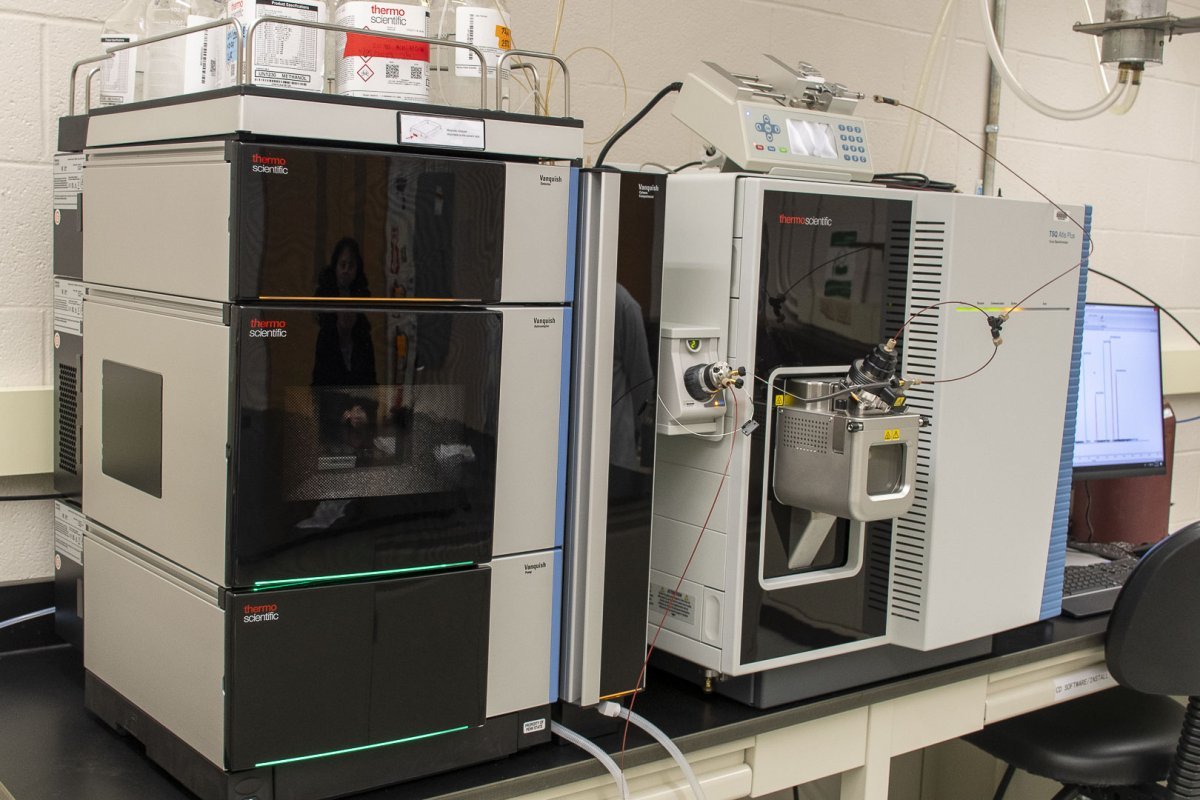
Chemical Characterization
Browse instruments used for contaminant detection, chemical imaging, chromatography, mass spectrometry, and screening.
Accepted Sample Types
Environmental samples
- Drinking water
- Surface water
- Groundwater and well water
- Wastewater
- Sediment, soil, and biosolids
Biological samples
- Tissues
- Blood and components
- Cultured cells
- Aquatic and marine organisms
Plant samples
- Seed
- Root
- Stem
- Leaf
- Flower tissue
Product and material samples
- Packaging materials
- Polymer components
- Coatings and adhesives
- Textiles and films
- Consumer product materials
Data, QA/QC, and deliverables
Project Deliverables
The final data and reports are tailored to the analytical method, sample type, and project objectives. Depending on project scope, reports include
- Detailed method and analytical instrumentation parameters and settings
- Sample preparation workflows
- Characterization and quantification of targeted contaminants
- Detailed QA/QC procedures and supporting documentation
- Data interpretation and guidance
How staff support projects
Lab staff help connect research questions to appropriate analytical workflows.
- Review project fit and feasibility
- Discuss sample collection and preparation needs
- Support method planning and development
- Coordinate reporting expectations and next steps
Ready to discuss a project?
Work with lab staff to determine the right analytical approach, sample requirements, and next steps for your research or project.